Gutscheinbedingungen

**Gültig vom 24.08.2026 bis 26.08.2026 | Gültig für nicht preisgebundene fremdsprachige Bücher | Einzelne Artikel können ausgeschlossen sein | Online auf www.bücher.de einlösbar | Click & Collect nur mit Online-Zahlung (Paypal/Kreditkarte) vorab | Nicht kombinierbar mit anderen Gutscheinen oder Preisaktionen | Nur einmal pro Einkauf einlösbar | Gutschein wird auf max. 500€ Bestellwert angerechnet | Keine Barauszahlung | Nicht gültig für Versandkosten und Services

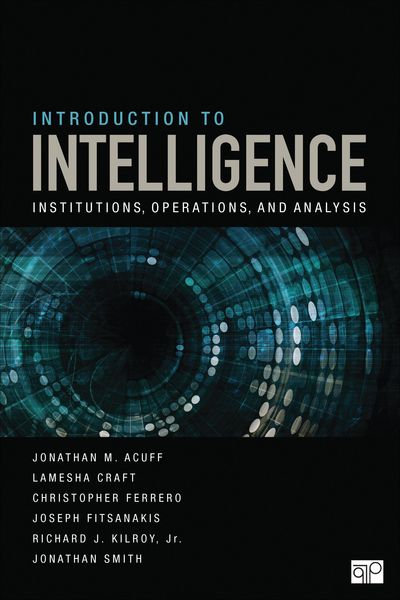
Produktbild: Ferrero, C: Introduction to Intelligence
- 15%

Ferrero, C: Introduction to Intelligence Institutions, Operations, and Analysis

15% sparen

118,99 € UVP 140,50 €

inkl. gesetzl. MwSt., Versandkostenfrei


Beschreibung

Produktdetails

Einband

Taschenbuch

Erscheinungsdatum

13.05.2021

Verlag

Sage Publications

Seitenzahl

440

Maße (L/B/H)

22,9/15,8/1,7 cm

Gewicht

532 g

Sprache

Englisch

ISBN

978-1-5443-7467-3

Beschreibung

Produktdetails

Einband

Taschenbuch

Erscheinungsdatum

13.05.2021

Verlag

Sage Publications

Seitenzahl

440

Maße (L/B/H)

22,9/15,8/1,7 cm

Gewicht

532 g

Sprache

Englisch

ISBN

978-1-5443-7467-3

EU-Ansprechpartner

Zeitfracht Medien GmbH
Ferdinand-Jühlke-Straße 7
99095 Erfurt
DE

Herstelleradresse

SAGE Publications
1 Oliver's Yard 55 City Road
EC1Y 1SP London
GB

Noch keine Bewertungen vorhanden

Verfassen Sie die erste Bewertung zu diesem Artikel

Helfen Sie anderen Kundinnen und Kunden durch Ihre Meinung.

Kundinnen und Kunden meinen

Bewertungen (0)

  • Produktbild: Ferrero, C: Introduction to Intelligence
  • Preface
    Acknowledgments
    About the Authors
    Chapter 1. Introduction
    What Is Intelligence?
    The Purpose of Intelligence
    Conclusion: The Promise and the Limitations of Intelligence
    Key Concepts
    Additional Reading
    Chapter 2. Intelligence History
    Intelligence From Antiquity to the Westphalian State System
    Intelligence in Late Medieval and Early Modern Europe
    Intelligence in America From the Revolution to Pearl Harbor
    World War II and the Birth of the Modern
    The Cold War
    Intelligence in the 21st Century: 9/11 and Its Aftermath
    Conclusion: Assessing Over 3,000 Years of Intelligence History
    Key Concepts
    Additional Reading
    Chapter 3. Intelligence and Security Institutions: Organizations and Processes
    An Illustration of Intelligence Support
    The National Security Framework in the US System
    The Growth of the National Security Bureaucracy
    Intelligence Organizations in the US System of Government
    The Intelligence Cycle and Its Critics
    Conclusion: Critiques and Alternative Approaches
    Key Concepts
    Additional Reading
    Chapter 4. Comparative Intelligence Systems
    Cases in Intelligence Studies
    The United Kingdom
    French Republic
    Federal Republic of Germany
    Israel
    Russian Federation
    People's Republic of China
    Conclusion: Similarities and Differences of Foreign
    Key Concepts
    Additional Reading
    Chapter 5. Intelligence Operations
    How Do We Collect Intelligence?
    Complexity and Challenges of Contemporary Intelligence Operations
    Intelligence Collection Planning
    The Five Principal Intelligence Collection Disciplines and Beyond
    Military Intelligence
    Conclusion: Intelligence Operations Summary
    Key Concepts
    Additional Reading
    Chapter 6. Counterintelligence
    The World of Espionage and Intrigue
    Counterintelligence Roles and Missions
    Defensive Counterintelligence
    Offensive Counterintelligence
    Contemporary Challenges for Counterintelligence
    Conclusion: Counterintelligence Summary
    Key Concepts
    Additional Reading
    Chapter 7. Covert Action
    Types of Covert Action
    Oversight of Covert Action in the United States
    The US Military and Covert Action
    Conclusion: Considerations in Covert Action
    Key Concepts
    Additional Reading
    Chapter 8. Cyberspace Operations and the Information Environment
    Convergence of Technology
    Peeling Back the Layers of Cyberspace
    The US Cyber Strategy
    Analyzing Cyber Threats
    Conclusion: The Complexity of Threats in the Cyberspace Domain
    Key Concepts
    Additional Reading
    Chapter 9. Intelligence Regulation and Governance
    McCarthyism and the Second Red Scare
    Domestic Intelligence and COINTELPRO
    The Watergate Scandal
    The Church and Pike Committees
    Intelligence Oversight After Watergate
    Intelligence Oversight in Practice
    The Separation of Powers in Intelligence Oversight
    Conclusion: An Imperfect but Indispensable System
    Key Concepts
    Additional Reading
    Chapter 10. Inter-Agency Communications
    The Inherent Tensions in Intelligence Communications
    Communications Challenges in Intra-Agency Settings
    Communications Challenges in Inter-Agency Settings
    Products for Intelligence Consumers
    Getting the Attention of Intelligence Consumers
    Retaining the Attention of Intelligence Consumers
    Conclusion: Making Intelligence Useful
    Key Concepts
    Additional Reading
    Chapter 11. Intelligence Analysis
    Epistemology and Intelligence Analysis
    Forecasting and the Challenges of Prediction
    Psychological Biases and Intelligence Analysis
    Conclusion: From the Philosophy of Science to Practice
    Key Concepts
    Additional Reading
    Chapter 12. Analytic Methods
    The Contemporary Context of Intelligence Analysis
    Methods Used to Analyze Intelligence Targets
    Presenting Findings: The Structure and Voice of Written
    Conclusion: Patterns of Recruitment and Training of Intelligence Analysts in the US Intelligence Community
    Key Concepts
    Additional Reading
    Chapter 13. The Ethics of Intelligence
    Of Ethics and Moral Systems
    Case Studies
    Conclusion: The Ethical Demands of National Service
    Key Concepts
    Additional Reading
    Chapter 14. Threats to the United States and Its Interests
    Strategic Competitors
    Pandemics
    Climate Change as a Driver of International Instability
    Cyber Threats in the 21st Century
    Inter-state War
    Ethnic Conflict, Revolution, and State Destabilization
    Weapons of Mass Destruction
    Terrorism
    Criminal Networks
    Conclusion: Of Threats and Priorities
    Key Concepts
    Additional Reading
    Index