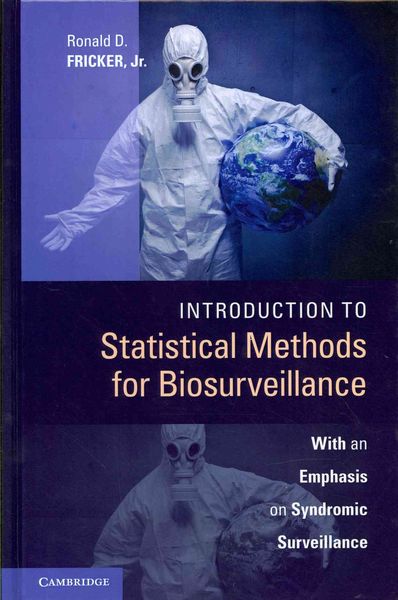
Introduction to Statistical Methods for Biosurveillance
83,99 €
inkl. gesetzl. MwSt.,
Beschreibung
Produktdetails
Einband
Gebundene Ausgabe
Erscheinungsdatum
25.04.2013
Abbildungen
143 b/w illus. 3 maps 30 tables, Zeichnungen, nicht spezifiziert, Karten, Tabellen, nicht spezifiziert
Verlag
Cambridge University PressSeitenzahl
416
Maße (L/B/H)
24/16,1/2,7 cm
Gewicht
787 g
Sprache
Englisch
ISBN
978-0-521-19134-0
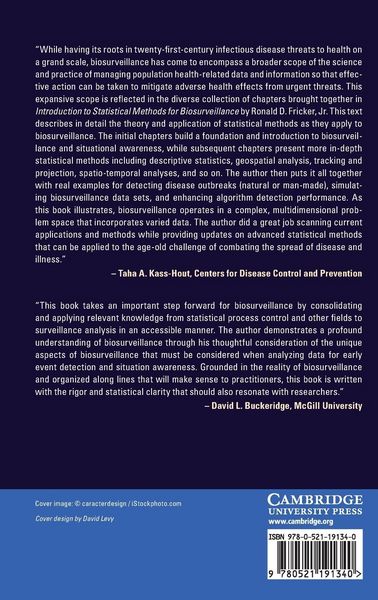
Bioterrorism is not a new threat, but in an increasingly interconnected world, the potential for catastrophic outcomes is greater today than ever. The medical and public health communities are establishing biosurveillance systems designed to proactively monitor populations for possible disease outbreaks as a first line of defense. The ideal biosurveillance system should identify trends not visible to individual physicians and clinicians in near-real time. Many of these systems use statistical algorithms to look for anomalies and to trigger epidemiologic investigation, quantification, localization and outbreak management. This book discusses the design and evaluation of statistical methods for effective biosurveillance for readers with minimal statistical training. Weaving public health and statistics together, it presents basic and more advanced methods, with a focus on empirically demonstrating added value. Although the emphasis is on epidemiologic and syndromic surveillance, the statistical methods can be applied to a broad class of public health surveillance problems.
Noch keine Bewertungen vorhanden
Verfassen Sie die erste Bewertung zu diesem Artikel
Helfen Sie anderen Kundinnen und Kunden durch Ihre Meinung.
Kurze Frage zu unserer Seite
Vielen Dank für dein Feedback
Wir nutzen dein Feedback, um unsere Produktseiten zu verbessern. Bitte habe Verständnis, dass wir dir keine Rückmeldung geben können. Falls du Kontakt mit uns aufnehmen möchtest, kannst du dich aber gerne an unseren Kund*innenservice wenden.
zum Kundenservice