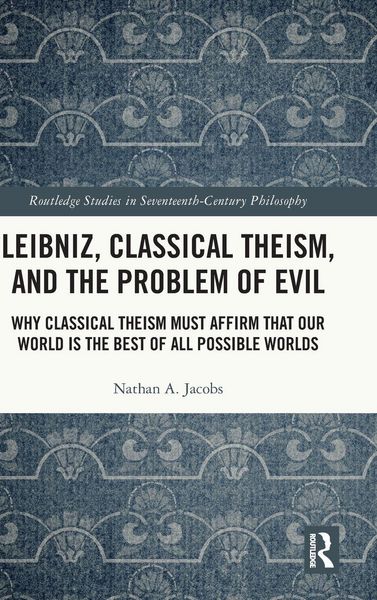
Leibniz, Classical Theism, and the Problem of Evil Why Classical Theism Must Affirm That Our World is the Best of All Possible Worlds
168,99 €
UVP
249,40 €
inkl. gesetzl. MwSt.,
Beschreibung
Produktdetails
Einband
Gebundene Ausgabe
Erscheinungsdatum
30.07.2025
Verlag
Taylor & FrancisSeitenzahl
406
Maße (L/B/H)
23,5/15,7/2,6 cm
Gewicht
736 g
Sprache
Englisch
ISBN
978-1-03-273921-2
This volume offers a defense of Leibniz's theodicy and his infamous claim that our world is the best of all possible worlds. It considers Leibniz's rationale for "optimism," examines its roots in ancient and medieval thought, and forwards a novel rereading of Leibniz's theory of freedom in light of this background, all of which highlights the very real challenges of evading optimism from within the framework of classical theism.
Gottfried Leibniz is known for his "theodicy," or defense of God's Goodness, Wisdom, and Justice despite the realities of evil in our world. This book argues that Leibniz's optimism is inevitable for proponents of classical theism and even for many not-so-classical theists. The author's argument is threefold. First, he demonstrates that Leibniz's theodicy is deeply rooted in the classical theist tradition, pagan and Christian, and shows that the philosopher of Leipzig is merely following these commitments to their logical conclusion, a conclusion that long precedes Leibniz. Second, he offers a novel rereading of Leibniz in the light of his philosophical and theological antecedents, a reading that, if correct, dispels ubiquitous but problematic assumptions about Leibniz's case, specifically those about divine and human freedom. Third, he demonstrates the analytic tether that connects classical theism to Leibniz's conclusion, making his notorious optimism virtually inevitable for proponents of classical theism - and even for not-so-classical theists. This book demonstrates the ways in which Leibniz is relevant to not only classical theists and students of Modern philosophy but also to contemporary philosophers of religion more generally and philosophical theologians who are concerned with the problem of evil.
Leibniz, Classical Theism, and the Problem of Evil will appeal to scholars and graduate students interested in Leibniz, philosophy of religion, history of philosophy, philosophical theology, free will, and the problem of evil.
Noch keine Bewertungen vorhanden
Verfassen Sie die erste Bewertung zu diesem Artikel
Helfen Sie anderen Kundinnen und Kunden durch Ihre Meinung.
Kurze Frage zu unserer Seite
Vielen Dank für dein Feedback
Wir nutzen dein Feedback, um unsere Produktseiten zu verbessern. Bitte habe Verständnis, dass wir dir keine Rückmeldung geben können. Falls du Kontakt mit uns aufnehmen möchtest, kannst du dich aber gerne an unseren Kund*innenservice wenden.
zum Kundenservice