Beschreibung
Produktdetails
Einband
Gebundene Ausgabe
Erscheinungsdatum
09.03.2022
Verlag
World Scientific PublishingSeitenzahl
294
Maße (L/B/H)
23,5/15,7/2 cm
Gewicht
580 g
Sprache
Englisch
ISBN
978-981-12-4965-5
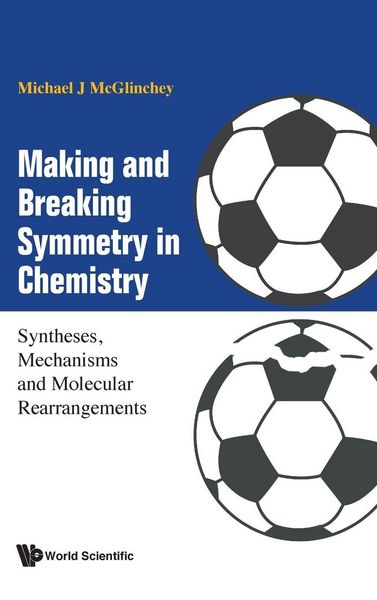
The elucidation of reaction mechanisms generally requires the carefully designed control of molecular symmetry to distinguish between the many possible reaction pathways. Making and Breaking Symmetry in Chemistry emphasises the crucial role played by symmetry in modern synthetic chemistry. After discussion of a number of famous classical experiments, the advances brought about by the introduction of new techniques, in particular NMR spectroscopy, are exemplified in numerous cases taken from the recent literature. Experimental verification of many of the predictions made in Woodward and Hoffmann's explication of the Conservation of Orbital Symmetry are described. Applications that involve the breaking of molecular symmetry to resolve these and other mechanistic problems in organic, inorganic and organometallic chemistry are presented in the first sections of the book, together with many examples of the detection of hitherto hidden rearrangement processes. Subsequently, under the aegis of making molecular symmetry, examples of the preparation of highly symmetrical molecules found in the organic, organometallic or inorganic domains are discussed. These include Platonic hydrocarbons or boranes, tetrahedranes, cubanes, prismanes, dodecahedrane, fullerene fragments such as corannulene, sumanene or semibuckminsterfullerene, and other systems of unusual geometries or bonding characteristics (Möbius strips, molecular brakes and gears, Chauvin's carbomers, Fitjer's rotanes, persubstituted rings, metal-metal multiple bonds, etc.). The text also contains vignettes of many of the scientists who made these major advances, as well as short sections that briefly summarise key features of important topics that underpin the more descriptive material. These include some aspects of chirality, NMR spectroscopy, and the use of isotopic substitution to break molecular symmetry. A brief appendix on point group symmetry and nomenclature is also helpfully provided.
Noch keine Bewertungen vorhanden
Verfassen Sie die erste Bewertung zu diesem Artikel
Helfen Sie anderen Kundinnen und Kunden durch Ihre Meinung.
Kurze Frage zu unserer Seite
Vielen Dank für dein Feedback
Wir nutzen dein Feedback, um unsere Produktseiten zu verbessern. Bitte habe Verständnis, dass wir dir keine Rückmeldung geben können. Falls du Kontakt mit uns aufnehmen möchtest, kannst du dich aber gerne an unseren Kund*innenservice wenden.
zum Kundenservice