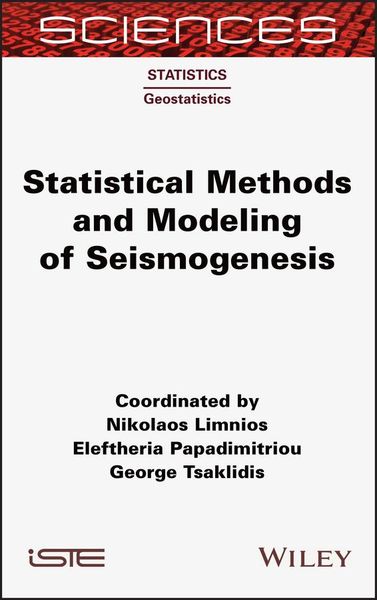
Produktbild: Statistical Methods and Modeli

Statistical Methods and Modeli

197,99 €

inkl. gesetzl. MwSt., Versandkostenfrei


Beschreibung

Produktdetails

Einband

Gebundene Ausgabe

Erscheinungsdatum

01.01.1900

Verlag

John Wiley & Sons

Seitenzahl

336

Maße (L/B/H)

23,4/15,6/1,9 cm

Gewicht

635 g

Auflage

1. Auflage

Sprache

Englisch

ISBN

978-1-78945-037-8

Beschreibung

Produktdetails

Einband

Gebundene Ausgabe

Erscheinungsdatum

01.01.1900

Verlag

John Wiley & Sons

Seitenzahl

336

Maße (L/B/H)

23,4/15,6/1,9 cm

Gewicht

635 g

Auflage

1. Auflage

Sprache

Englisch

ISBN

978-1-78945-037-8

Herstelleradresse

Libri GmbH
Europaallee 1
36244 Bad Hersfeld
DE

Email: gpsr@libri.de

Noch keine Bewertungen vorhanden

Verfassen Sie die erste Bewertung zu diesem Artikel

Helfen Sie anderen Kundinnen und Kunden durch Ihre Meinung.

Kundinnen und Kunden meinen

Bewertungen (0)

Die Leseprobe wird geladen.
  • Produktbild: Statistical Methods and Modeli
  • Preface xi
    Nikolaos LIMNIOS, Eleftheria PAPADIMITRIOU and George TSAKLIDIS
     
    Chapter 1. Kernel Density Estimation in Seismology 1
    StanisBaw LASOCKI
     
    1.1. Introduction 1
     
    1.2. Complexity of magnitude distribution 7
     
    1.3. Kernel estimation of magnitude distribution 13
     
    1.4. Implications for hazard assessments 14
     
    1.5. Interval estimation of magnitude CDF and related hazard parameters 16
     
    1.6. Transformation to equivalent dimensions 19
     
    1.7. References 23
     
    Chapter 2. Earthquake Simulators Development and Application 27
    Rodolfo CONSOLE, Roberto CARLUCCIO
     
    2.1. Introduction 28
     
    2.2. Development of earthquake simulators in the seismological literature 28
     
    2.2.1. ALLCAL 28
     
    2.2.2. Virtual quake 29
     
    2.2.3. RSQSim 30
     
    2.2.4. ViscoSim 30
     
    2.2.5. Other simulation codes 30
     
    2.2.6. Comparisons among simulators 31
     
    2.3. Conceptual evolution of a physics-based earthquake simulator 32
     
    2.3.1. A physics-based earthquake simulator (2015) 33
     
    2.3.2. Frequency-magnitude distribution of the simulated catalog (2015) 36
     
    2.3.3. Temporal features of the synthetic catalog (2015) 38
     
    2.3.4. Improvements in the physics-based earthquake simulator (2017-2018) 41
     
    2.3.5. Application to the seismicity of Central Italy 42
     
    2.3.6. Further improvements of the simulator code (2019) 46
     
    2.4. Application of the last version of the simulator to the Nankai mega-thrust fault system 49
     
    2.5. Appendix 1: Relations among source parameters adopted in the simulation model 54
     
    2.6. Appendix 2: Outline of the simulation program 56
     
    2.7. References 58
     
    Chapter 3. Statistical Laws of Post-seismic Activity 63
    Peter SHEBALIN, Sergey BARANOV
     
    3.1. Introduction 63
     
    3.2. Earthquake productivity 64
     
    3.2.1. The proposed method to study productivity 65
     
    3.2.2. Earthquake productivity at the global level 69
     
    3.2.3. Independence of the proximity function 72
     
    3.2.4. Earthquake productivity at the regional level 76
     
    3.2.5. Productivity in relation to the threshold of the proximity function 78
     
    3.2.6. Discussion 79
     
    3.3. Time-dependent distribution of the largest aftershock magnitude 81
     
    3.3.1. The distribution of the magnitude of the largest aftershock in relation to time 82
     
    3.3.2. The agreement between the dynamic Båth law and observations 85
     
    3.3.3. Discussion 86
     
    3.4. The distribution of the hazardous period 88
     
    3.4.1. A model for the duration of the hazardous period 89
     
    3.4.2. Determining the model parameters 91
     
    3.4.3. Using the early aftershocks 96
     
    3.5. Conclusion 98
     
    3.6. References 100
     
    Chapter 4. Explaining Foreshock and the Båth Law Using a Generic Earthquake Clustering Model 105
    Jiancang ZHUANG
     
    4.1. Introduction 105
     
    4.1.1. Issues related to foreshocks 106
     
    4.1.2. Issues related to the Båth law 108
     
    4.1.3. Study objectives 108
     
    4.2. Theories related to foreshock probability and the Båth law under the assumptions of the ETAS model 109
     
    4.2.1. Space-time ETAS model, stochastic declustering and classification of earthquakes 109
     
    4.2.2. Master equation 110
     
    4.2.3. Asymptotic property of F(m') 113
     
    4.2.4. Foreshock probabilities and their magnitude distribution in the ETAS model 117
     
    4.2.5. Explanation of the Båth law by the ETAS model 118
     
    4.3. Foreshock simulations based on the ETAS model 120
     
    4.3.1. Works by Helmstetter and others 120
     
    4.3.2.