Beschreibung
Produktdetails
Einband
Taschenbuch
Erscheinungsdatum
01.07.2024
Verlag
TreditionSeitenzahl
102
Maße (L/B/H)
23,4/15,5/0,8 cm
Gewicht
185 g
Sprache
Englisch
ISBN
978-3-384-27627-8
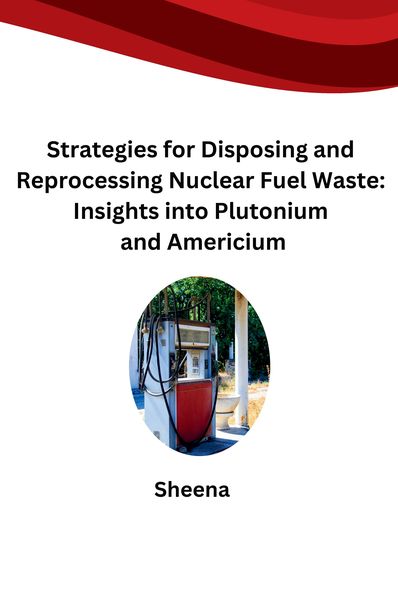
Strategizing the disposal and reprocessing of nuclear fuel waste, focusing on plutonium and americium, involves complex considerations. Disposal strategies emphasize deep geological repositories, where waste can be safely isolated for thousands of years, minimizing environmental impact. Reprocessing techniques recover reusable materials from spent fuel, reducing waste volume and extending resource utilization. However, managing plutonium and americium presents challenges due to their long-lived radiotoxicity, requiring stringent containment measures to prevent environmental contamination and public health risks.Innovative approaches such as transmutation aim to transform long-lived isotopes into shorter-lived or stable elements, further reducing the hazardous nature of nuclear waste. International collaboration and regulatory frameworks play crucial roles in ensuring safety and compliance throughout these processes. By integrating these strategies, stakeholders can enhance sustainability, minimize waste volumes, and mitigate the long-term impacts of nuclear fuel waste containing plutonium and americium on both present and future generations.
Noch keine Bewertungen vorhanden
Verfassen Sie die erste Bewertung zu diesem Artikel
Helfen Sie anderen Kundinnen und Kunden durch Ihre Meinung.
Kurze Frage zu unserer Seite
Vielen Dank für dein Feedback
Wir nutzen dein Feedback, um unsere Produktseiten zu verbessern. Bitte habe Verständnis, dass wir dir keine Rückmeldung geben können. Falls du Kontakt mit uns aufnehmen möchtest, kannst du dich aber gerne an unseren Kund*innenservice wenden.
zum Kundenservice